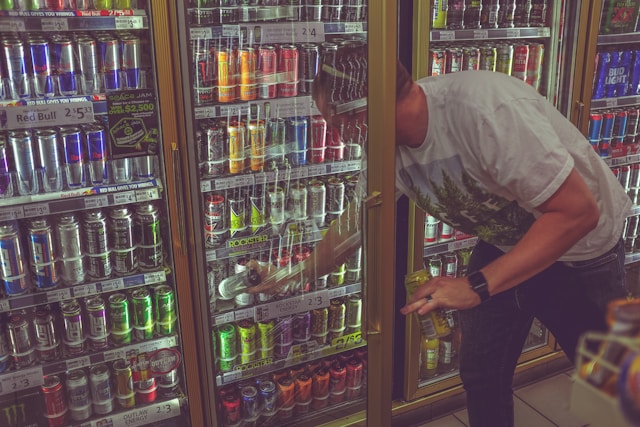
Published in December of 2025 in BMJ Case Reports, “Energy drinks, hypertension and stroke,” reported on a man in his fifties who was hospitalized for what was diagnosed as ischaemic thalamic stroke. He was started on antihypertensives and discharged after 72 hours. But his blood pressure rose again and remained high despite increases to his antihypertensive medications. Upon further questioning, he said he was drinking around eight cans of energy drinks daily, where each contained 160 mg of caffeine. And when he stopped this habit, his blood pressure (BP) normalized.
Medpage Today described this case report and said his blood pressure was brought down from 254/150, to 170/80 at the time of his discharge from the hospital, but he continued to have uncontrolled BP over the next 3 months. He was hospitalized again and put on more antihypertensive medication. When a more detailed lifestyle examination was done, the man reported eight 16 oz cans of energy drink per day, with 1.2-1.3 grams of caffeine per day. “NICE [National Institute for Health and Care Excellence] guidelines suggest a maximum daily intake of 400 mg.” The authors said it seemed acute and chronic use of energy drinks may increase the risk of cardiovascular disease and stroke, “and more importantly, this may be reversible.” The lead author of the study said:
With energy drinks, there are a few things which we particularly wanted to highlight: the other ingredients in them which interact and potentiate the caffeine effect, the high glucose content which has its own cardiovascular risks that contribute, and the very high content in small portions which is not advertised and importantly not known by the general public, especially being something that young people consume innocently as opposed to coffee.
One week after stopping all energy drinks, his average BP readings were 120-130 over 80-84. His antihypertensives were reduced, but his BP remained at healthy levels. He was completely weaned off all medications after 3 weeks, but numbness remained. In a patient statement in the case report, Newsweek reported that he said he wasn’t aware of the dangers of drinking energy drinks and still had numbness in his left hand and fingers and toes after eight years.
This incident led to increased calls for tighter regulation and oversight of energy drinks in the U.K. The study authors also recommended increased regulation of energy drink sales and advertising campaigns, which are often targeted at younger ages.
In “Navigating the Buzz: FDA Energy Drink Regulations,” Digicomply Insights said their regulation in the U.S. comes under the FDA, which has guidelines to ensure consumer safety, particularly concerning labeling, ingredient safety, and health claims. They are categorized as dietary supplements or conventional foods.
Dietary Supplements: If an energy drink is marketed as a dietary supplement, it must comply with the Dietary Supplement Health and Education Act (DSHEA). This includes adhering to Good Manufacturing Practices (GMPs), ensuring that product labeling is accurate, and that no false claims are made about the health benefits.
Conventional Foods: Energy drinks classified as conventional foods must meet the requirements set forth in the Federal Food, Drug, and Cosmetic Act (FFDCA). This includes ingredient safety, labeling, and packaging regulations.
The FDA does not impose a strict limit on caffeine levels in energy drinks as it does for food and beverages. But it does advise most adults to keep under 400 milligrams of caffeine per day. Manufacturers are required to disclose caffeine content on product labels, but consumers often underestimate the caffeine levels in energy drinks, as was evident in the above discussion of the BMJ Case Reports article.
All ingredients in energy drinks must be “Generally Recognized As Safe” (GRAS) or have undergone safety evaluations. But several ingredients commonly found in energy drinks such as taurine, guarana, and ginseng, do not have extensive safety data. Energy drinks also make various health claims, like improving stamina and improved concentration. The energy drink ZOA Energy even claimed to have “0 preservatives,” even though it did.
Digicomply also noted there is increasing concern over the marketing of energy drinks to children and adolescents. The FDA acknowledged excessive caffeine use can be a health risk to younger populations. But is excessive caffeine use just a health risk with youth? Discussions at the FDA on adapting its regulatory framework with energy drinks included enhanced research to better understand the long-term effects of energy drink consumption. Second, public health initiatives to educate consumers about the risks associated with energy drink consumption. And third, monitoring global trends in energy drink regulation to inform U.S. policies and ensure consumer safety.
The regulation of energy drinks by the FDA represents a critical intersection of public health, consumer safety, and product marketing. As the popularity of these beverages continues to rise, so too does the need for robust regulatory oversight. Stakeholders in the energy drink industry must remain vigilant, adapting to evolving regulations and consumer expectations while prioritizing safety and transparency.
They have become a worldwide-phenomena. Statista Consumer Market Outlook said the revenue from energy and sports drinks worldwide was around 208 billion U.S. dollars in 2024 and is estimated to increase to over $248 billion by 2029.
Energy Drink Addiction?
Reddit has several discussion forums with titles like, “Energy drink addiction, how do I stop;” “Addicted to energy drinks for 10 years;” and others. Kratom, a plant native to Southeast Asia, with stimulant and opioid-like effects, is in an energy drink called Feel Free. Regular kratom use can lead to physical dependence, tolerance and withdrawal. Yes, energy drinks can lead to a substance use disorder.
On August 8, 2017, the NIH described “Energy drinks and risk of future substance use.” Researchers from the University of Maryland suggested that college students who regularly consumed energy drinks were at a greater risk for future alcohol use disorder, cocaine use, or the misuse of prescription stimulants. Participants were followed over three years to see if their past-year use of energy drinks increased, decreased or remained consistent; and then were assessed at five years for their past-year substance use.
In groups that showed consistent or increasing probabilities of using energy drinks over the years, researchers found higher rates of cocaine use, prescription stimulant misuse and alcohol use disorder – but not marijuana or tobacco use. This finding held true regardless of how often subjects consumed the drinks (infrequently, occasionally or frequently) and even after accounting for prior substance use and other risk factors.
Although these findings are consistent with animal studies suggesting that caffeine can prime the still-developing teen brain for later drug use, this study does not establish that energy drink consumption directly causes an increased risk for substance use in humans. Further research on energy drinks is needed to guide prevention and policy efforts in teens.
The line between energy drinks and substance use disorder is increasingly blurred with the addition of products like cannabis drinks and Feel Free (with kratom and kava) are introduced. Pyramid Healthcare said addiction professionals are now seeing more cases of kratom-related dependence, with Feel Free playing a growing role in the trend. Combining kratom and kava can create a feeling of relaxed euphoria or increased mental clarity, but comes with potential consequences like tolerance and physical dependence. “Many users of Feel Free report needing multiple bottles per day to avoid feeling tired or irritable. This cycle of increasing use and dependency mirrors the patterns seen in more traditional substance use disorders.”
Because Feel Free is sold legally and often in health food stores or gas stations, many assume it’s safe. But kratom and kava are not regulated by the FDA, and their safety has not been thoroughly studied in the combinations or quantities found in products like Feel Free.