The interest in and the development of psychedelic therapies for the treatment of psychiatric conditions has been growing and getting what has been called an “explosion of mainstream clinical research efforts.” The psychiatric conditions that have been investigated include depression, post traumatic stress disorder, anxiety disorders, and various substance use disorders. And the psychedelics have included LSD, psilocybin, mescaline, dimethyltryptamine (DMT), ketamine, MDMA, ibogaine and ayahuasca. But will they be able to find a therapeutic use for a hallucinogenic mushroom that makes you see little people?
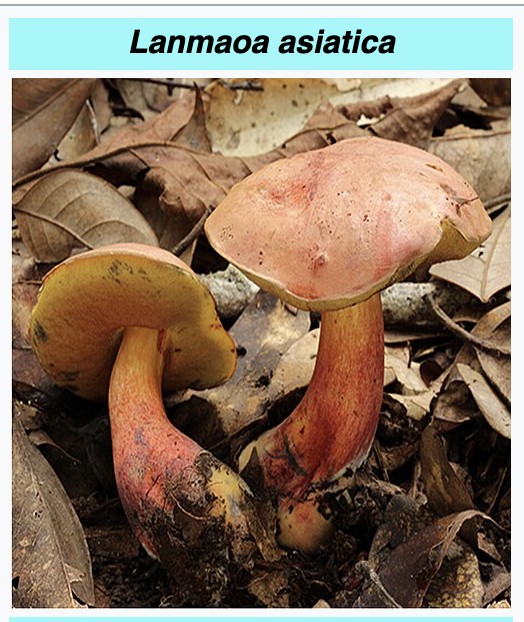
Seriously, there is a species of mushroom called Lanmaoa asiatica, native to southwestern China and the northern Philippines, where it is wild-harvested and has been sold in local markets for decades. It has a symbiotic relationship with pine trees and as a result, it can’t be cultivated artificially. L. asiatica was only identified as a unique species of mushroom in 2015. Despite decades of anecdotal reports of what are called Lilliputian hallucinations, western scientists dismissed them as “mushroom madness.”
Colin Domnnauer, a doctoral candidate studying ethnobiology at the University of Utah, has made the investigation of the L. asiatica mushroom the focus of his dissertation. He’s already published a research article in the journal, Mycologia, where he described this hallucinogenic compound. He was also interviewed by Live Science and described what he knows so far about L. asiatica. He said they don’t know exactly how much of the mushroom is required to get the hallucinations. “These effects are seen as an accidental side effect of eating too much, or if they’re not cooked enough.”
But if you do have a substantial amount, what we do know is that after about 12 to 24 hours you’re going to start getting Lilliputian hallucinations, which is a clinically defined syndrome that’s characterized by seeing little people or animals all around your environment.
And these aren’t like some vague hallucinations, these are like three-dimensionally-rendered, highly-detailed figures inhabiting your exterior world. And they’re also interacting with objects in the real world — like crawling up chairs and tables or under doorways, people say. So there’s a very strange and specific type of reality-grounded, projected hallucination.
ScienceAlert reported that in order to find out what causes these hallucinations, Domnnauer and his co-author sequenced the genomes of 53 mushroom samples from the wider Lanmoa genus. But they didn’t find any close hits with genes known in the production of mushroom psychoactive compounds. “This supports our hypothesis of the presence of a novel unidentified metabolite responsible for the unique hallucinogenic properties of L. asiatica.”
Science can’t explain what’s going on in the brain to cause these hallucinations, or how to treat it. The L. asiatica mushroom is the only thing known to reliably produce this effect. There are many hospital reports of people in Yunnan China who report people getting affected like this. One study looked at 400 cases in a year of people affected by L. asiatica mushroom, with 90% reporting they had Lilliputian hallucinations. “It’s a hallmark symptom of this mushroom.”
Read more about Colin Domnnauer and the L. asiatica mushroom in the Live Science or ScienceAlert articles, or in the New York Post: “New magic mushroom makes users see tiny ‘gnome’ people.”
The Potential and Pitfalls for Psychedelic Therapeutics
While the scientific investigation of the L. asiatica mushroom is just starting, the interest in psychedelic therapies has been gaining momentum for some time now. The journal Neuropsychopharmacology published “Psychedelic therapeutics in psychiatric conditions” in January of 2026. There, the authors defined psychedelics, reviewed the current status of psychedelic therapies, the conditions targeted, the compounds under investigation and the strategies employed in their research. Safety concerns discussed for psychedelics included “immediate medical adverse events (AEs), persisting AEs, and abuse potential.”
The psychological effects of psychedelics include changes in emotional processing and your sense of self, and alterations in sensory perception such as visual and auditory illusions, distortions and/or hallucinations. There is also psychomotor slowing, and shifts in attention, working memory, and executive function. There can be so-called mystical experiences, “characterized by a sense of unity, ineffability, and deep reverence for life, oneself, and the world.” These common experiences are not experienced by users of the L. asiatica mushroom, who say their vision is clear and largely unaltered.
The article reviewed the use of psilocybin for major depression (MDD) and treatment resistant depression (TRD). There are also other studies of TRD and MDD in process with DMT, LSD, and MDMA. There have been at least 8 randomized, placebo-controlled trials of MDMA for PTSD, with many presenting positive results. However, the FDA rejection of the Lykos psychedelic-assisted therapy study was noted for its questionable conduct, which included functional unblinding and therapist misconduct. For more information on concerns with the Lykos studies with MDMA, see: “Psychedelics as the Newest Craze, Part 2” and “The Long Strange Trip of MDMA-Assisted Therapy.”
The authors also described trials being done to investigate LSD’s efficacy for generalized anxiety disorder (GAD), and mescaline’s, DMT’s or psilocybin’s efficacy in treating substance use disorders and alcohol use disorder (AUD). Historically, alcoholism was the first disorder to be treated with the psychedelic LSD, in the 1950s, see: “Bill W. and his LSD Experiences,” Part 1 and Part 2 and “As Harmless as Aspirin?” Other conditions being investigated include: obsessive-compulsive disorder, tobacco dependence, premenstrual dysphoric disorder, anorexia nervosa, and others.
There were questions with regard to dosing strategies with the various psychedelics in clinical trials that will have implications for the clinical uses of these treatments. The authors said it seems likely the duration of treatment benefits and required dosing will be both condition and compound-specific. “If clinical benefits within a compound are fortuitously homogenous across conditions, then dosing strategies could converge as well.” There were also questions about the feasibility and cost of psychedelic-assisted therapy.
First, regulatory agencies are being asked to approve both a medication treatment and a psychotherapy. The previous Lykos decision suggests there will be ongoing concerns regarding the separability of medication and psychotherapeutic effects. Second, access may be limited, particularly for individuals who are disabled by long-term psychiatric issues such as TRD or PTSD. Payers [i.e., insurance companies] are commonly reluctant to pay adequately for psychotherapy alone and are even less willing to pay for unlicensed providers. Many insurance plans cap the number of psychotherapy sessions allowed, and some of the current models have more psychotherapy visits than payers are willing to cover. This concern would be potentially reduced with institutional payers, such as the VA or national health service insurance plans, such as those in the UK or Canada. However, in the public sector in the United States, this would be a major concern. In the state of Florida, for instance, no outpatient services delivered by a psychologist are covered by Medicaid.
Safety concerns include possibly illicitly obtained psychedelic medications that could be self-administered with other substances. This was the case with Matthew Perry, whose cause of death was from the acute effects of ketamine, with contributing factors that included buprenorphine (used to treat opioid disorder). Psychedelics are known to increase blood pressure, raising the risk of stroke in patients with pre-existing hypertension.
There is a major controversy about whether the psychedelic experience is a prerequisite for therapeutic efficacy. A number of scientists have argued the treatment gains are intrinsically correlated with the intensity of the psychedelic experience; others aren’t convinced. It has been argued that compounds could be developed that replicate the therapeutic benefits of classical psychedelics without the related psychedelic experience.
These compounds are described as “plastogens” in that they promote the same postulated plasticity processes induced by current psychedelics. If this were to prove to be the case, many of the challenges associated with both clinical trial design and regulatory issues would be resolved. First, blinding would be easier. Second, safety concerns would be reduced, as abuse liability would seem to be limited by the lack of psychedelic effects. This possibility creates a real conundrum, because if regulators are unwilling to accept data from trials without unequivocal blinding, do we have to wait until the next generation of “non-psychedelic plastogens” work their way through all of the stages of FDA approval? This would be a very challenging position, because if their efficacy turns out to be less than the original compounds, then the wait would potentially be quite disruptive to the development effort.
Regulatory Hurdles with Psychedelic Therapeutics
“Psychedelic therapeutics in psychiatric conditions” also discussed the legal status of psychedelic therapies, where most of the compounds have extremely restricted access currently. It also had a discussion of the problems with blinding, because psychedelics are difficult, if not impossible to mask for clinical trials. Double blind randomized clinical trials are required for FDA clinical trials. “The majority of participants in trials of psilocybin and MDMA accurately identified their treatment condition.” Cannabis has been suggested as a possible active placebo in single-dose psychedelic studies. In conclusion, the authors said:
Data from supervised trials suggests that the safety risks seem lower, acutely and long-term, than illicit use. However, many studies have had limited safety assessments and limited long-term follow-up. Further, standard blinded trials are very difficult because psychedelic effects have made blinding challenging, and many participants are aware of their assigned treatment. The controversy about the need for a psychedelic experience is far from resolved, and medications are in development that aim to provide therapeutic efficacy without the psychedelic experience. These compounds would be promising for blinding trials, but these medications are years behind existing compounds in their development. If regulators decide that these drugs must be fully tested before drugs that are hard to blind could be approved, this could create considerable tension.
There are other issues unique to psychedelic treatment and clinical trials. For instance, the high number of participants with previous psychedelic experience. This raises questions about the blinding and motivation for participating in the studies, as well as the composition of potential candidates for clinical treatment with psychedelics. Another is the potential influence of Oregon’s partial legalization of psilocybin. Combined with its decriminalization, and the medical access to cannabis, developers may hold off on the further of psychedelic treatments, awaiting FDA approval.
Right now, there is considerable excitement and investment into psychedelic treatments and developing predictors of treatment response could become a high priority. “If we could develop such biomarker predictors of psychedelic agents, the pathway for approval could be accelerated because of bypassing the challenge of blinded trials.” The authors said it would be “revolutionary” if the therapeutic potential of these treatments could be confirmed. For now, psychedelic treatments make their way forward in the hope that efficacy can be demonstrated “in the context of historical regulatory hurdles.”
But let’s not forget those historical regulatory hurdles were put in place to prevent drug development catastrophes like the 1937 Elixir Sulfanilamide Disaster that killed over 100 people and led to the Federal Food, Drug , and Cosmetic Act of 1938. Then there was the Thalidomide tragedy of the 1950-1960s, where thalidomide was prescribed to treat morning sickness, leading to over 10,000 babies that were born with severe limb malformation. Those so-called “regulatory hurdles” are there to prevent us from going where we don’t want to go. So, let’s be patient with them and not throw the baby out with the bathwater by circumventing the existing regulations for expediency with psychedelics.