
European researchers wondered to what extent video games can influence adult-wellbeing. They noted Internet Gaming Disorder (IGD) has typically been associated with adolescence, but thought there was evidence that problematic gaming continued to impact individuals into their twenties and thirties. The study by Gisbert-Perez et al published in Addictive Behaviors said the estimated prevalence of IGD in the general population ranged from 3.05% to 6.7%. However, IGD was more prevalent among young adults than the general population, especially among gamers.
Young adulthood is a crucial stage for biological, psychological, and social development and is typically defined as between 18 and 35. The American Psychological Association suggests given the prolonged process of adult development in modern society young adulthood can extend from the early 20s to the mid-30s. “During this extended developmental stage, many processes that begin in adolescence, such as brain maturation, identity exploration, and the establishment of intimate relationships, remain ongoing.” While young adulthood is a time of increasing autonomy and cognitive maturity, it is also a period of instability and vulnerability, “potentially heightening the risk for conditions such as IGD, as individuals seek coping mechanisms during transitions in education, work, and social life.”
Brain Development and Gaming
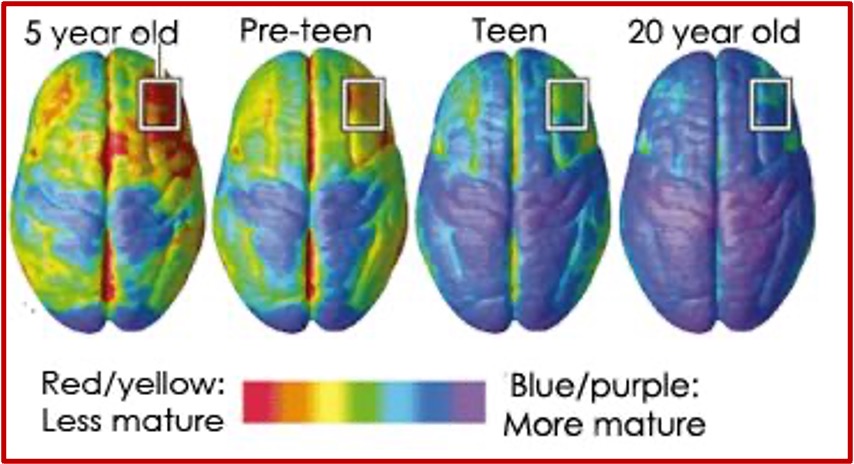
Brain maturation may play a role in IGD. In “Brain Development During Adolescence,” Lumen Learning said the human brain is not fully developed until the mid- to late-20s. Yet by the age of six or seven, the brain reaches 90% of its adult size. The frontal lobe of the brain, called the prefrontal cortex, is one of the last parts of the brain to mature (by the early 20s) and is responsible for planning, prioritizing and controlling impulses. “Because it isn’t fully developed, this might help to explain why teenagers sometimes show poor judgment.”
The limbic system matures ahead of the prefrontal cortex. “Development in the limbic system plays an important role in determining rewards and punishments and processing emotional experience and social information.” Two brain structures in the limbic system seem to be important in the development of IGD in adolescents, the amygdala and the hypothalamus. The amygdala regulates emotions and emotional responses and the hypothalamus regulates a number of things, including the endocrine or hormone system. “In combination with the prefrontal cortex, which helps to regulate our emotions, the fact that these structures are still developing during the teenage years might help to explain why teenagers can sometimes be moody; why they might sometimes have emotional outbursts.”
Audio and visual stimulation with video games would provide temporary relief and escape from stressful, emotional experiences. Habitual repetition of the sequence of actions or behaviors in playing a game over and over again would, through Hebb’s Law, make the complexity of a video game easier to do over time, and reinforce its habitual escapism. According to Hebb’s Law, “neurons that fire together wire together.” See “Brain Development During Adolescence” for more information on brain development, including a 6 ½ minute video.
In “Parenting and the Amazing Teen Brain,” Psychology Today said the end of brain maturation is correlated with the end of schooling. While our brains are no longer as flexible as they were when we are younger, they are faster and more efficient. Research has shown that brains don’t look like an adult brain until the early to mid-twenties. Higher functions such as impulse control, long term planning, emotional control, and risk-assessment (the hallmarks of an adult brain) are on a much slower maturation schedule.
The parts of the brain that are consistently accessed get strengthened, while the parts not used are pruned away. The teen brain is on a mission to build up what is needed and get rid of what isn’t, which is why the final stage of brain maturation is a decrease in gray matter in the early twenties. This time is the window for pushing teen development, as the goal is to push the brain to develop as many connections as possible. Connections are built and reinforced through repetitive exposure to new physical skills, mental skills, and life experiences.
See the following graphic of brain development from childhood to young adult from “Parenting and the Amazing Teen Brain.”
“Brain Development During Adolescence” said IGD has similarities to other behavioral and substance-related disorders like gambling disorder and obsessive-compulsive disorder. In fact, IGD seems to be associated with pathological gambling and alcohol use disorder in adults. “Individuals with both IGD and alcohol use disorder tend to display more severe clinical features, such as impulsiveness, impaired self-control, and mood symptoms like depression, compared to those affected by only one of these conditions;” in other words dysfunction with the prefrontal cortex and limbic system. The Gisbert-Perez et al study showed the overall prevalence of IGD in young adults (ages 18 to 35) ranged from 5.03% to 7.4%, higher than the general population prevalence noted above.
This meta-analysis provides an estimate of the prevalence of IGD among young adults. Traditionally, this developmental stage has not been the primary focus of studies related to gaming-related issues. This overall prevalence estimate highlights an emerging problem, emphasizing the need for policies or strategies aimed at prevention, as well as public and mental health interventions tailored to this age group. Furthermore, the specific findings related to young adults enable institutions, such as higher education establishments, to create digital education campaigns or workshops that promote responsible gaming. The results also underline the importance of training personnel in higher education and healthcare to identify IGD within this demographic.
Gaming Disorder in the DSM-5 and ICD-11
PsyPost said the study in Addictive Behaviors suggested IGD was a significant mental health concern for young adults, and indicated problematic gaming is not limited to adolescence, but can continue to impact individuals into their twenties and thirties. Recognized as a condition needing further study in the DSM-5-TR, IGD is an official diagnosis in the ICD-11. One of the researchers said: “From a public health perspective, even a prevalence of 5–8% translates into a large number of affected individuals worldwide.”
The DSM-5 criteria for the disorder include symptoms such as preoccupation with gaming and withdrawal symptoms when not playing. They also include the development of tolerance, meaning the need to play more to achieve the same satisfaction. Other signs involve unsuccessful attempts to quit and the loss of interest in other hobbies.
To receive a diagnosis under DSM-5 guidelines, an individual typically must meet five of nine specific criteria within a 12-month period. The severity of the condition is judged by how much it disrupts the person’s daily life. The variability in diagnostic tools suggests that the scientific community has not yet reached a complete consensus on how best to measure this condition.
The American Psychiatric Association said whether internet gaming should be classified as an addiction/mental health disorder “is the subject of much debate and a growing body of research.” Neurological research shows similarities and changes in the brain between video gaming and addictive substances. Multiple studies reported the incidence of IGD increased dramatically during the COVID pandemic. For more information on internet gaming in the DSM-5, see “Internet Gaming.”
Gaming disorder is defined in the ICD-11 as a pattern of gaming behavior characterized by impaired control over gaming, increased priority given to gaming over other activities “to the extent that gaming takes precedence over other interests and daily activities, and continuation or escalation of gaming despite the occurrence of negative consequences.”
For gaming disorder to be diagnosed, the behaviour pattern must be severe enough that it results in significant impairment to a person’s functioning in personal, family, social, educational, occupational or other important areas, and would normally have been evident for at least 12 months.
Studies suggest that gaming disorder affects only a small proportion of people who engage in digital- or video-gaming activities. However, people who partake in gaming should be alert to the amount of time they spend on gaming activities, particularly when it is to the exclusion of other daily activities, as well as to any changes in their physical or psychological health and social functioning that could be attributed to their pattern of gaming behaviour.
Internet gaming can become an “unhealthy,” compulsive pattern of behavior and may warrant a DSM diagnosis as a behavioral addiction along with gambling disorder. If there is neurological research that shows similarities in the brain between internet gaming and addictive substances, and if the ICD-11 formally recognizes gaming disorder as a disorder, AND the American Psychiatric Association has placed IGD in the section recommending further research, why not make it official? I’m not sure the concern it would pathologize a normal behavior and create a new stigma is enough justification to avoid recognizing IGD as a DSM disorder.
Gaming, Diet, Body Mass, and Sleep
Newsweek described an Australian study published in Nutrition that found playing video games for more than 10 hours a week could have a significant effect on the health outcomes of university students. There was little difference between “low gamers” (zero to five hours weekly) and “moderate gamers” (five to 10 hours weekly) with diet quality, sleep and body weight. But students who played video games more than 10 hours a week (high gamers) had noticeably poorer health outcomes.
Diet quality declined significantly among high gamers, who were more likely to be classified as obese. Even after accounting for stress, physical activity and other factors, “Each additional hour of gaming per week was linked to a decline in diet quality.” Sleep quality was generally poor across all three gaming groups, but moderate and high gamers reported worse sleep than low gamers. “The analysis showed a significant link between longer gaming hours and sleep disruption, particularly when gaming extended late into the night.”
Medical Xpress reported one of the study’s researchers said the study didn’t prove gaming causes these issues, but it showed a clear pattern that excessive gaming may be linked to increased health risk factors. “Because university habits often follow people into adulthood, healthier routines such as taking breaks from gaming, avoiding playing games late at night and choosing healthier snacks may help improve their overall well-being.”
The Nutrition study by Kaewpradup et al said their observed negative association between gaming frequency and diet quality aligned with previous research that found poor dietary patterns among frequent gamers. Each additional hour of weekly gaming was independently associated with a 0.16-point decrease in diet quality score, even after controlling for demographic and lifestyle factors. This suggested a direct relationship between gaming behavior and nutrition.
The gaming environment itself may contribute to poor diet quality through the availability and marketing of energy-dense snacks and beverages. Previous content analysis has shown that 84% of food products advertised in popular video games fail to meet nutritional quality standards, with energy drinks being the most commonly featured product. This environmental factor, combined with the convenience-seeking behavior typical during extended gaming sessions, may explain the consistently poor dietary patterns observed among frequent gamers.
The significant correlation between gaming frequency and BMI represents an important finding of this study. High-frequency gamers had a median BMI of 26.3 kg/m² compared to 22.2 kg/m² in low-frequency gamers, with significantly higher rates of overweight and obesity. This finding is consistent with previous research demonstrating positive energy balance among frequent gamers due to increased caloric intake and reduced physical activity.
Gaming frequency was significantly associated with impaired sleep quality, with high-frequency gamers reporting PSQI scores indicating poor sleep, which may have implications for academic performance and overall health. This relationship may be mediated by blue light exposure suppressing melatonin production, cognitive arousal interfering with sleep onset, and irregular sleep schedules. Gaming timing appears particularly important, with evening gaming delaying sleep onset. Although gaming timing was not assessed, our findings suggest interventions targeting gaming schedules and presleep behaviors may benefit sleep quality. In addition, all gaming groups in our study demonstrated poor sleep quality (PSQI > 5), including low-frequency gamers (median = 6.0), indicating that poor sleep was prevalent across university students independent of gaming habits. Our findings suggest gaming frequency may exacerbate pre-existing poor sleep quality and highlight the importance of selecting populations with adequate baseline sleep quality to determine gaming’s independent effects.
In conclusion, the researchers suggested universities may need to consider integrating gaming-related health education into wellness programs and develop targeted interventions that address specific mechanisms linking gaming to adverse health outcomes.