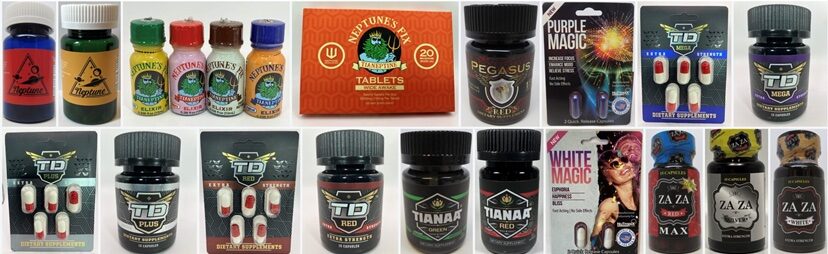
NPR noted the murky regulatory position of tianeptine. While it is not listed as a federally controlled substance, it’s illegal to market or sell the drug. Brought to market in Europe in the 1980s, millions of people in Europe, Asia and South America have used the drug to treat depression even though no one was sure exactly how it worked. It’s sold in the U.S. as a nootropic or cognitive enhancer and is available at vape shops, gas stations and sold online. However, a growing number of states have now banned tianeptine, and it’s often called “gas station heroin.”
Tianeptine is not approved by the FDA for medical use, which has taken steps to protect people from tianeptine products for several years, including warning about its severe side effects, that include agitation, confusion, coma, and even death. In countries where it is an approved drug, the dosage is typically 12.5 mg, three times daily. “Higher doses can produce euphoria, and some countries have restricted how tianeptine is prescribed and dispensed or revised the drug label to warn of possible addiction.” Case reports in the medical literature have described U.S. “consumers” ingesting 50 mg to 10,000 mg, 1.3 to 250 times the daily recommended dose in foreign drug products. If stopped abruptly, users may experience symptoms similar to those associated with opioid withdrawal.
Experts warn that it’s dangerous to consume any unapproved drug, particularly one that poses the risk of dependency and withdrawal, and that in the case of tianeptine, can cause respiratory depression and severe sedation. Often packaged in colorful, shot-sized bottles, these rogue tianeptine products contain the drug in varying concentrations and have also been found to include dangerous synthetic cannabinoids.
Tianeptine gained market approval in France as an antidepressant under the trade name Stablon. The recommended dose was small (a 12.5 mg tablet); and because it had a short half-life, was to be taken three times a day. “It also was advertised as having minimal side effects.” Researchers realized tianeptine didn’t work like other antidepressants, and in 2012 (25 years after it was approved), a French advisory panel said the exact antidepressant mechanism of action was not known.
Tianeptine Abuse and Overdose Deaths
Researchers discovered tianeptine targeted the μ-opioid receptor, activating it like morphine, oxycodone or fentanyl. After they published their findings in 2014, reports of tianeptine abuse rose. One of the authors of the research, “The atypical antidepressant and neurorestorative agent tiaptine is a μ-opioid receptor agonist,” was disturbed to hear of the reported increase of abuse after they published their findings. But the researchers weren’t thinking about the abuse potential of tianeptine. They were investigating tianeptine as treatment for depression and related disorders such as anxiety and stress.
Nevertheless, even before this research study people were beginning to abuse tianeptine. In 2007 Stablon added a warning that patients with a history of addiction should be closely monitored. French officials enacted restrictions, putting tianeptine under narcotics regulations and limited prescription length.
In the U.S., emergency calls about tianeptine spiked after the opioid findings emerged. From 2000 to 2013, the National Poison Data System received an average of less than one call a year about tianeptine exposure, according to the CDC. But dozens of calls began to come in after 2014, and cases have continued to rise, with 391 calls about tianeptine to U.S. poison centers in 2023, according to America’s Poison Centers, a nonprofit that partners with the CDC and state agencies.
There is a Reddit forum, where people describe their experiences quitting tianeptine, where it says, “Many here are currently addicted, as well as former users who remain to offer advice and encouragement from the other side.” One person said they had 3 days-worth of 7oh and planned to jump to subs (buprenorphine) afterwards. Their first 3 days were bad and then it got worse and they ended up in the ER. Another person was in inpatient treatment. “Was doing 5 bottles a day before I came in. Still craving it and struggling with the mental part but physically feel better than I have [in] I can’t remember how long.”
For more information on 7oh, see “Unregulated Kratom Is a Problem.”
There was a cluster of calls to New Jersey’s poison control center in 2023 that were traced to Neptune’s Fix, a tianeptine elixir that also contained other compounds like cannabinoids. The FDA issued several warnings and sent a letter to retailers urging them to stop selling any product with tianeptine. The letter said the FDA was actively investigating new reports in conjunction with local and state health departments. There have even been overdose deaths reported.
The first known tianeptine fatalities occurred when two Texas men died after ordering tianeptine powder online. “Drug paraphernalia and bags labeled as tianeptine powder were found at both scenes.” The family of an Ohio man who died after taking Neptune’s Fix filed a wrongful death suit. The parents of another Texas man who died after taking tianeptine sued an online retailer in 2015; the company halted its business soon afterward. See this short CBS 8 report from San Diego that described a man who overdosed on tianeptine he bought at his local smoke ship. But vendors continued to market and sell tianeptine for medical uses.
This led to an updated FDA warning about tianeptine on May 8, 2025 that repeated it was not approved for any medical use, doesn’t meet the standard definition of a dietary ingredient, and is not generally recognized as safe for use in food. The same day, the Commissioner of the FDA published a letter to health care professionals to encourage patients, “to avoid all products containing tianeptine, including those claiming to treat an ailment or disorder.” He noted the FDA had taken steps to protect people from tianeptine products, including warning consumers about severe side effects, issuing warning letters to companies distributing and selling unlawful tianeptine products, and creating an import alert to help detain tianeptine shipments into the country.
I am very concerned. I want the public to be especially aware of this dangerous product and the serious and continuing risk it poses to America’s youth. While the FDA is closely following the distribution and sale of these products, it is critical that you appreciate the magnitude of the underlying danger of these products, and disseminate information about it.
Historically, there has been a delayed recognition of fast-growing trends, such as opioid abuse and vaping addiction in youth. Let’s be proactive in understanding and addressing the use of tianeptine products, which are available even to our nation’s youth.
This led organizations like Science Alert, Medscape and the Associated Press to write about the FDA warning about tianeptine. The AP noted where the FDA issued a warning letter to the maker of Tianna, which claimed to provide “an unparalleled solution to cravings for opiates.” Calls to poison control centers increased 525% between 2018 and 2023. Almost 40% of the individuals had to seek medical care, with more than half of them needing critical care. While this is suggestive that more Americans are using the products, experts also say the products are triggering more emergencies because they’ve become “more potent and dangerous.”
Yet, the federal government has not taken steps to protect Americans from the potential public health threat from tianeptine by listing it as a controlled substance. At this point, at least around fourteen states have passed laws prohibiting or restricting tianeptine. However, all the bad press against “gas station heroin” seems to have led to tianeptine products almost disappearing online. So, as Michael Conrad used to say in the TV show Hill Street Blues, “Let’s be careful out there.”